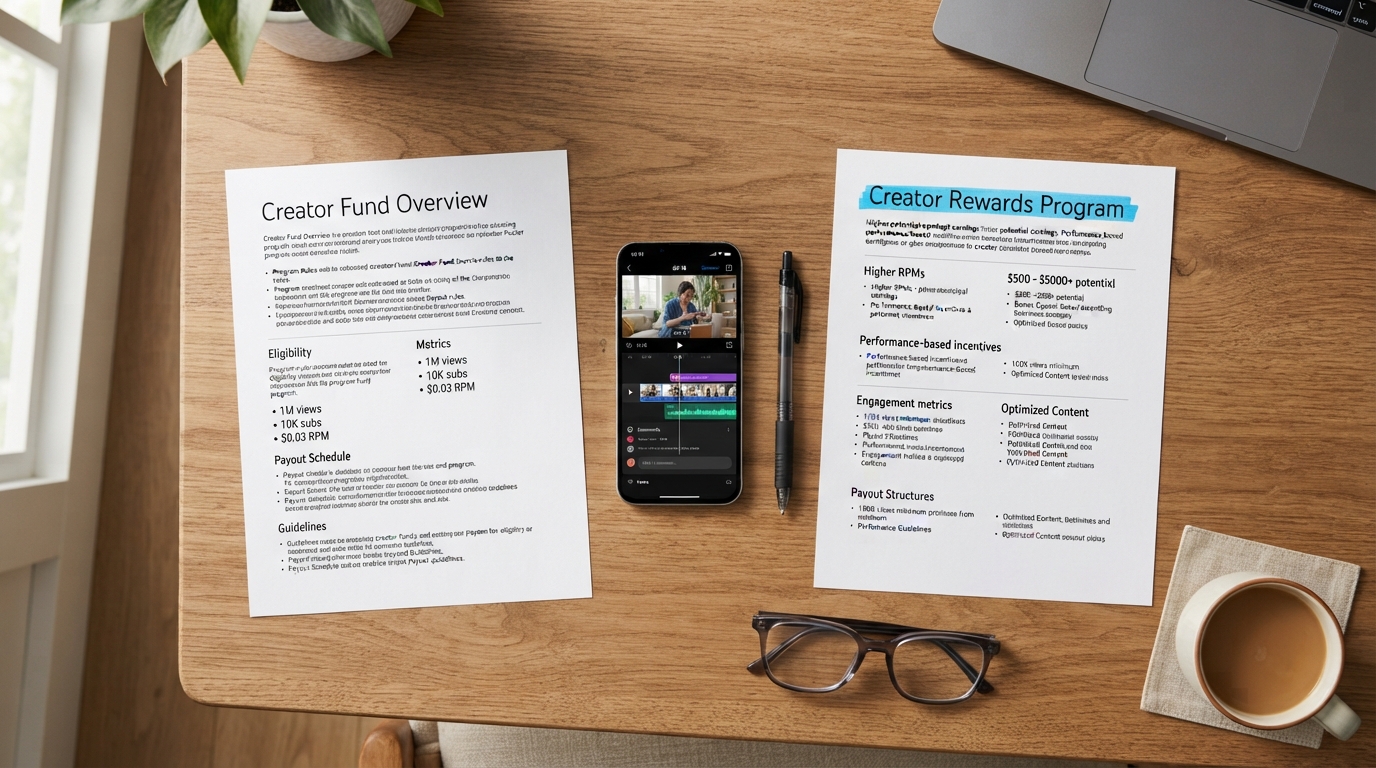
If you've seen wildly different numbers for "how much TikTok pays" depending on which article you read, a lot of that comes down to one thing: TikTok has run two very different monetization programs, and a lot of content online still describes the old one. Here's exactly what changed between the Creator Fund and its replacement, the Creator Rewards Program.
The Original Creator Fund (2020–2023)
How It Worked
Launched in 2020, the Creator Fund paid creators a small amount based on video views, engagement, and a few other factors, drawn from a fixed fund pool TikTok allocated across all participating creators. Eligibility required a minimum follower count and age threshold, and payouts were distributed monthly directly through the app.
Why It Was Widely Criticized
The Creator Fund became infamous among creators for paying reportedly as little as $0.02–$0.04 per 1,000 views — a rate many creators considered disproportionate to the views and effort involved, especially compared to what similar content could earn through YouTube's ad revenue share. The criticism became widespread enough that it shaped public perception of "TikTok doesn't pay creators" long after the program changed.
The Creator Rewards Program (2024–Present)
What Changed in the Payout Formula
TikTok rebuilt its monetization approach around a different formula, reportedly weighing originality, play duration, "search value," and audience engagement rather than raw view count alone. The result, based on widely reported creator data, is a payout range of roughly $0.40–$1.00 per 1,000 qualified views — meaningfully higher than the old Creator Fund. Our full breakdown of the current range and what moves it is in How Much Does TikTok Pay? RPM Explained.
The Eligibility Bar Is Higher
Along with better pay, the Creator Rewards Program raised the entry requirements: creators generally need at least 10,000 followers, 100,000 video views in the previous 30 days, an account in good standing, and videos that run at least one minute — original content only, with reused clips, compilations, and minimally-transformed reposts excluded from eligibility. The Creator Fund's requirements were comparatively lower, which partly explains why more creators could access it despite the lower payout.
Side-by-Side Comparison
| Creator Fund (2020–2023) | Creator Rewards Program (2024–Present) | |
|---|---|---|
| Reported rate | ~$0.02–$0.04 per 1,000 views | ~$0.40–$1.00 per 1,000 views |
| Minimum video length | No strict minimum | 1 minute or longer |
| Follower requirement | Lower threshold | 10,000+ followers |
| View requirement | Not required | 100,000+ views in prior 30 days |
| Payout basis | Views and engagement | Originality, play duration, search value, engagement |
| Status | Retired for most creators, December 2023 | Active, expanding by country |
What This Means If You're Deciding Whether to Pursue Monetization
The practical takeaway: if you evaluated TikTok monetization years ago and dismissed it based on Creator Fund-era numbers, the math has genuinely changed. The current program pays meaningfully more per view, though it also requires a larger, more established audience to qualify at all — which shifts the real question from "does TikTok pay enough to bother" toward "am I far enough along to qualify," a distinction we unpack further in Is Chasing TikTok Monetization Worth It?
Bottom Line
The Creator Fund and the Creator Rewards Program aren't the same thing wearing different names — they're structurally different, with the newer program paying roughly 10–25x more per 1,000 views in exchange for a meaningfully higher eligibility bar. Any "TikTok doesn't pay" take from before 2024 is describing a program that no longer exists for most creators.
Comparing multiple creators' stats before deciding who to work with? Look up any public TikTok profile on TikPeek — free and anonymous.
Want to Search a TikTok Profile Anonymously?
Enter any public username below to look up profile stats, follower growth, bio info, and recent video posts instantly.